How Spray Foam Saves Money in Texas Summers
Published: May 2026 | 4 Min Read
If you live or operate a business anywhere along the Gulf Coast—from Beaumont to Houston to Lake Charles—you already know that summer isn't just hot; it's brutally, oppressively humid. As the temperature gauges hit triple digits in July and August, local homeowners and Facility Managers watch in horror as their monthly electricity bills skyrocket. Your HVAC units run 24/7, struggling to keep the property cool while fighting a losing battle against the thermal heat radiating from your roof.
But what if there was a permanent way to stop the heat at the roofline?
The Problem with Traditional Insulation in Texas
Most homes are built with traditional fiberglass batt insulation laid across the attic floor, and many metal warehouses use thin fiberglass rolls that sag over time. There are two massive problems with this approach in our specific climate:
- It breathes: Fiberglass acts like a filter, not a barrier. When the hot, humid outdoor air is pulled into your home or facility through drafts, the fiberglass does nothing to stop it.
- The "Oven Effect": In a traditional vented attic or metal building, the sun bakes your roof, and the temperature inside can easily reach 140°F. Your AC ductwork usually runs straight through this 140-degree oven. This forces your system to work incredibly hard just to push cool air into your living or working space.
How Closed-Cell Spray Foam Changes the Game
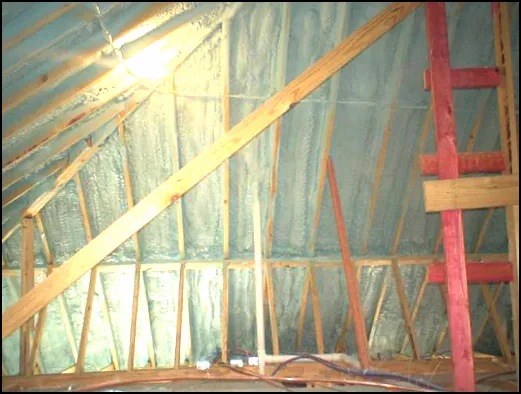
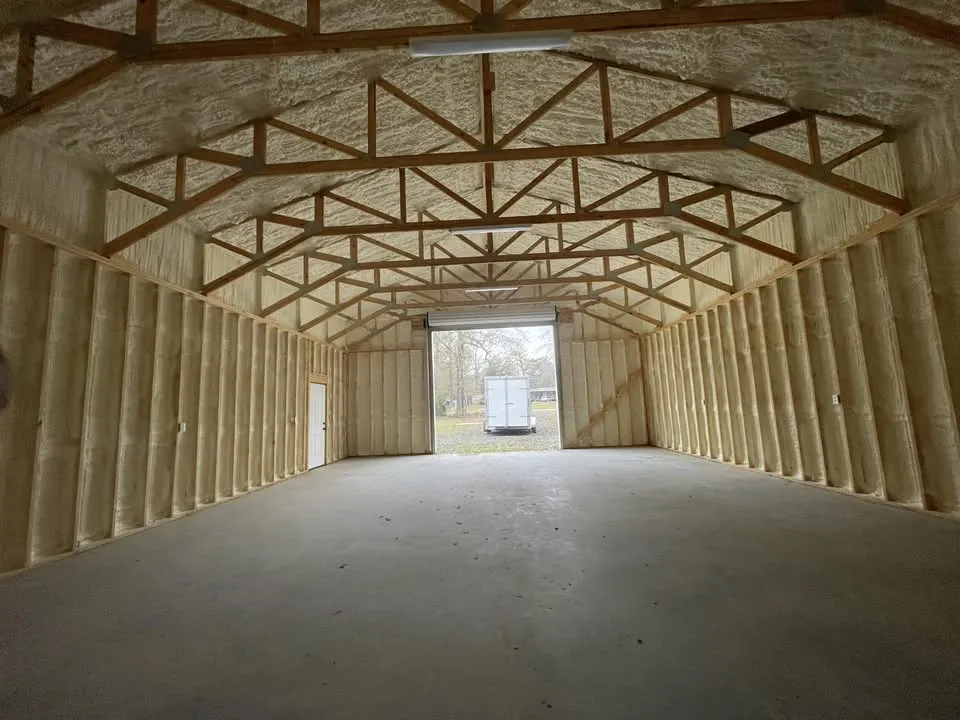
When you upgrade to Closed-Cell Polyurethane Spray Foam, the entire physics of your home changes. Instead of laying insulation on the attic floor, we spray the foam directly onto the underside of your roof deck.
Here is exactly how this process slashes your energy bills:
1. Creating an Unvented, Conditioned Space
By sealing the underside of the roof, your attic or metal building is no longer a 140-degree oven. It becomes a "conditioned" space, usually staying within 5 to 10 degrees of the temperature inside. Because your AC units and ductwork are now operating in a cool environment, they don't have to fight extreme thermal radiation. This drastically reduces the workload on your HVAC system, directly lowering your electric bill.
2. The Ultimate Air and Moisture Barrier
Closed-cell foam expands to fill every crack, crevice, and seam. It creates an absolute, impermeable barrier. The 100% humidity outside stays outside. Not only does this save you money on cooling, but it also prevents the dangerous mold, mildew, and rust that plagues so many aging buildings along the Gulf Coast.
3. Extreme Structural Rigidity
While this doesn't directly lower your energy bill, it's a massive financial benefit for Gulf Coast residents and business owners: closed-cell foam is completely rigid. When sprayed onto your roof deck or metal walls, it essentially glues the structure together, significantly increasing its structural integrity against hurricane-force winds.
The ROI: Is it Worth It?
Yes. While spray foam requires a higher initial investment than dumping cheap blown-in cellulose into an attic or hanging fiberglass rolls in a warehouse, the Return on Investment (ROI) is staggering. Property owners often report seeing their summer energy bills drop by 30% to 50%. In many cases, the monthly energy savings effectively "pay for" the cost of the insulation upgrade in just a few short years.
Stop Paying to Cool the Texas Sky
Contact Mouton Insulation today for a free estimate on outfitting your home or commercial building with premium spray foam.
Get Your Free Estimate